
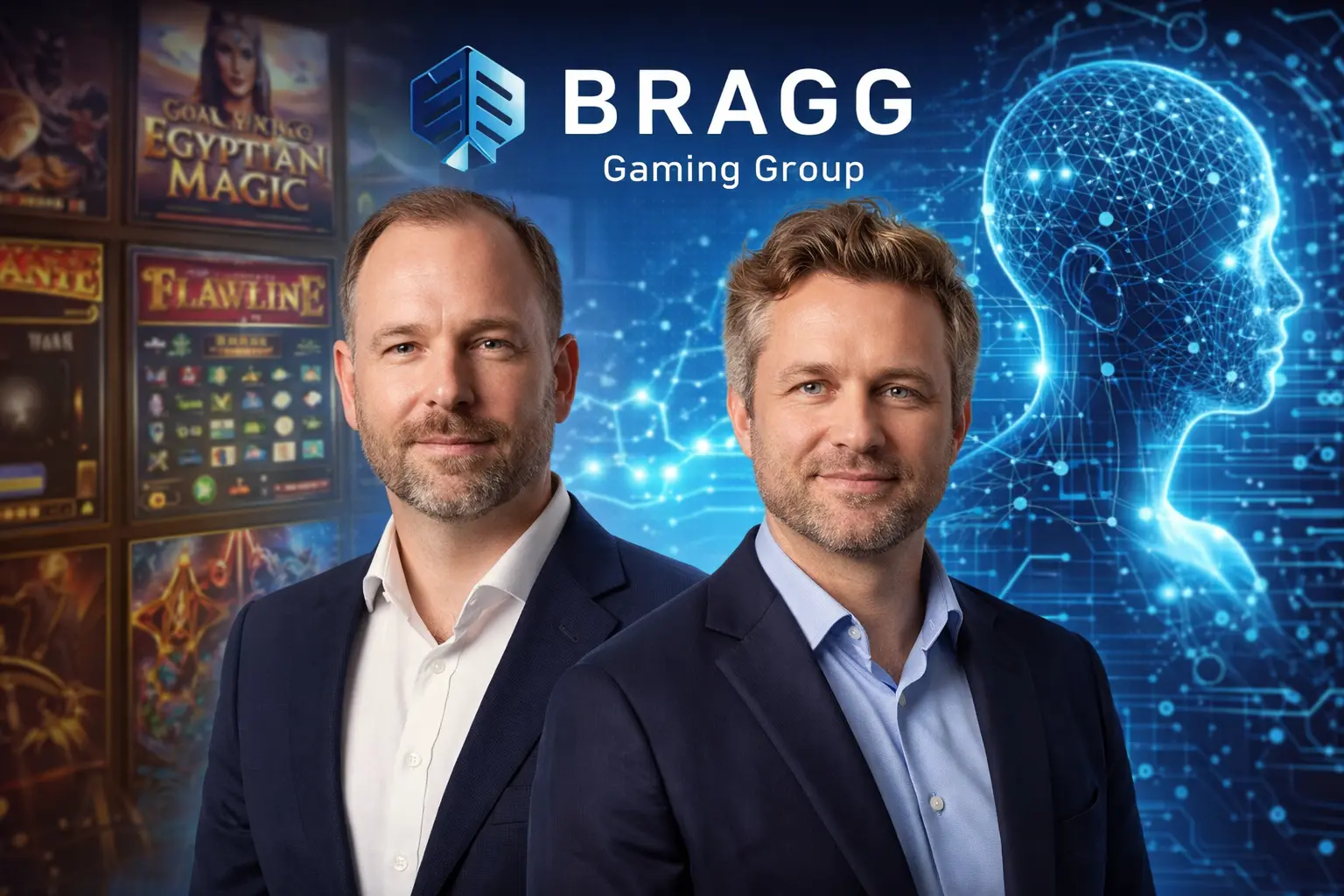
Bragg Gaming Group leadership changes and AI strategy
Bragg Gaming Group Leadership Changes arrive at an important moment for the supplier, as the company appoints Morten Tonnesen as chief operating officer and promotes Garrick Morris to EVP of global content, US and Canada. On the surface, this is a straightforward executive reshuffle, but the details point to something larger, a company trying to scale its higher-margin content business while tightening operations and leaning harder into AI.
According to Bragg Gaming Group, the appointments are designed to reinforce a strategic focus on “aggressively scaling and expanding the high-margin content business globally,” with particular emphasis on the US and Canada. That matters because the supplier’s global content business delivered 76% year-on-year growth in Q4 2025, a figure that gives clear context to why content leadership is now being elevated.
The company also said the leadership changes are intended to deliver enhanced operational leverage, streamline internal processes and improve overall efficiency across the organisation. In practical terms, that suggests Bragg is not just chasing growth, it is trying to build the internal structure needed to support that growth more efficiently.
Why these appointments matter now
Leadership announcements in iGaming often signal more than personnel changes, they reveal where a business believes its next wave of value will come from. In Bragg’s case, the message is unusually direct, the group wants to become a global B2B leader in content, engagement and infrastructure, while also positioning itself as what CEO Matevž Mazij believes will be iGaming’s “AI-First” company.
That framing turns this into a story about strategic alignment. Morten Tonnesen is stepping into the COO role at a time when Bragg is balancing multiple pressures, including complex regulatory compliance requirements, tax headwinds in the Netherlands and other regions, emerging market opportunities in the US and elsewhere, and possible consolidation across global iGaming and prediction markets.
Tonnesen himself acknowledged that complexity in his comments after joining. He said it had been “captivating to watch the scale, scope and speed with which Bragg is already building the Bragg AI Brain and, thereby, transforming itself into an AI-first company.”
His statement also offered an unusually clear look at his near-term priorities. Cash runway and EBITDA growth were front and centre, with Tonnesen saying his focus will be on helping steer the Bragg AI Brain toward protecting the company’s cash runway and driving EBITDA growth.
Morten Tonnesen brings growth and gambling experience
Tonnesen joins Bragg after leaving marketing software supplier Xtremepush in September 2025, where he had served as chief growth officer since March 2024. Before that, he was chief commercial officer at Shape Games for around three years, and earlier co-founded BetWarrior and served as its CEO before exiting the business.
For industry observers, one of the more notable parts of his background is his earlier time at PokerStars. He spent six years with the operator, culminating in the role of director of group marketing from 2014 to 2017.
That career path matters because it combines supplier-side growth, operator-side gambling experience and entrepreneurial execution. For a COO role, especially inside a company trying to scale content and infrastructure across markets with different rules and cost pressures, that mix looks highly relevant.
Garrick Morris and the importance of content execution in the US and Canada
While the COO appointment may attract the biggest strategic attention, the promotion of Garrick Morris could prove just as important operationally. Morris has been elevated from SVP commercial for US and Canada, a role he took on when he joined Bragg in 2024, to EVP of global content, US and Canada.
That title tells its own story. Global content is now being explicitly tied to Bragg’s North American opportunity, showing how closely the company sees its content ambitions and its US and Canada growth strategy.
Before joining Bragg, Morris held several senior roles across the industry, including COO of Digital Gaming Corporation, operations manager at Microgaming and IT platforms manager at Derivco. Those positions give him a profile that bridges commercial, operational and platform experience, all of which are central to content distribution at scale.
In his own comments, Morris pointed to concrete progress already made since joining Bragg in May 2024. He said the company has significantly expanded its US content footprint through the launch of new games, Remote Gaming Server technology and its Player Account Management platform.
He also highlighted what comes next, namely the planned strategic entrance into the Historical and Live Racing and Prediction markets segments. For readers following the competitive shape of North American digital gaming, that is a significant signal that Bragg sees adjacent verticals as part of its future value story.
AI, efficiency and the economics of higher-margin content
One of the most revealing parts of this announcement is how often Bragg connects leadership, AI and content economics in the same breath. The company said its content growth is supported by the acceleration of its AI implementation initiative, while Tonnesen specifically referenced the Bragg AI Brain.
That suggests AI is not being presented as a vague innovation label, but as an operating framework linked to efficiency and margin. Operational leverage, streamlined internal processes and improved efficiency are all phrases that indicate Bragg is trying to use technology not only to support product development, but to improve the underlying economics of the business.
In iGaming, this matters because content is one of the clearest differentiators available to B2B suppliers. If a company can scale proprietary or high-performing content while also improving efficiency through automation and smarter internal systems, the upside is not just revenue growth, it can also mean a stronger margin profile.
What the announcement says about the wider market
Even within the narrow scope of an executive appointment story, Bragg’s language reflects several of the defining realities of the market in 2026. The first is that regulation remains a moving target. Tonnesen explicitly referenced increasingly complex compliance requirements, a reminder that growth in iGaming is rarely just about launching in more places.
The second is tax pressure. His mention of headwinds in the Netherlands and other regions shows how operator and supplier economics can shift quickly when fiscal policy changes. For suppliers, that can increase the importance of high-margin product areas such as content, where differentiation may offset some external pressure.
The third theme is market adjacency. Morris referenced Bragg’s planned entry into Historical and Live Racing and Prediction markets, while Tonnesen referred to potential consolidation in global iGaming and prediction markets. Together, those remarks suggest that suppliers are thinking beyond traditional casino content categories and toward a broader digital wagering ecosystem.
Three takeaways from the Bragg Gaming Group leadership changes
- content is the core growth engine, Bragg’s 76% year-on-year growth in global content in Q4 2025 helps explain why leadership attention is shifting toward scaling that business,
- AI is being positioned as a business tool, not just a branding exercise, with Bragg linking its AI implementation initiative to efficiency, internal process improvement and EBITDA ambitions,
- North America remains central, with the US and Canada repeatedly highlighted and Morris tasked with leading global content while building on the company’s regional momentum.
A closer reading of Bragg CEO Matevž Mazij’s message
Mazij’s statement is short, but it is strategically dense. He said both leaders bring extensive iGaming expertise that will be vital as Bragg embarks on its next chapter, becoming a global B2B leader in content, engagement and infrastructure and what the company believes will be iGaming’s “AI-First” business.
The important phrase here is next chapter. It implies that Bragg views this not as incremental organisational maintenance, but as a transition into a new operating model where content, platform capability and AI are more tightly integrated.
There is also a clear hierarchy in the company’s messaging. Content sits at the centre, infrastructure supports it, engagement enhances it, and AI helps tie the model together more efficiently. Seen that way, the appointments of Tonnesen and Morris are less about replacing or promoting executives and more about assigning leadership to the exact parts of the business Bragg wants to scale fastest.
Final thoughts
The Bragg Gaming Group leadership changes are notable because they combine immediate operational intent with a wider strategic message. Bragg Gaming Group is telling the market that its future lies in scaling high-margin content, sharpening execution in the US and Canada, and using AI to improve efficiency while navigating regulatory and tax complexity.
Whether that strategy delivers will depend on execution, but the direction is clear. Tonnesen brings a background shaped by growth, commercial leadership and gambling experience, while Morris steps into a broader content role at a time when Bragg is already reporting strong momentum in that segment.
For the wider iGaming industry, this is the kind of announcement worth watching closely. It captures several of the sector’s defining themes in one move, leadership specialisation, content as a margin driver, AI as an operational tool and North America as a strategic priority.
“I’m thrilled to welcome Morten to Bragg and congratulate Garrick on his promotion. Both leaders are highly qualified, bringing extensive iGaming expertise that will be vital as we embark on our next chapter, becoming a global B2B leader in Content, Engagement, and Infrastructure and what we believe will be iGaming’s ‘AI-First’ company.”