Brazil’s potential ban on bookmakers and Lula’s stance
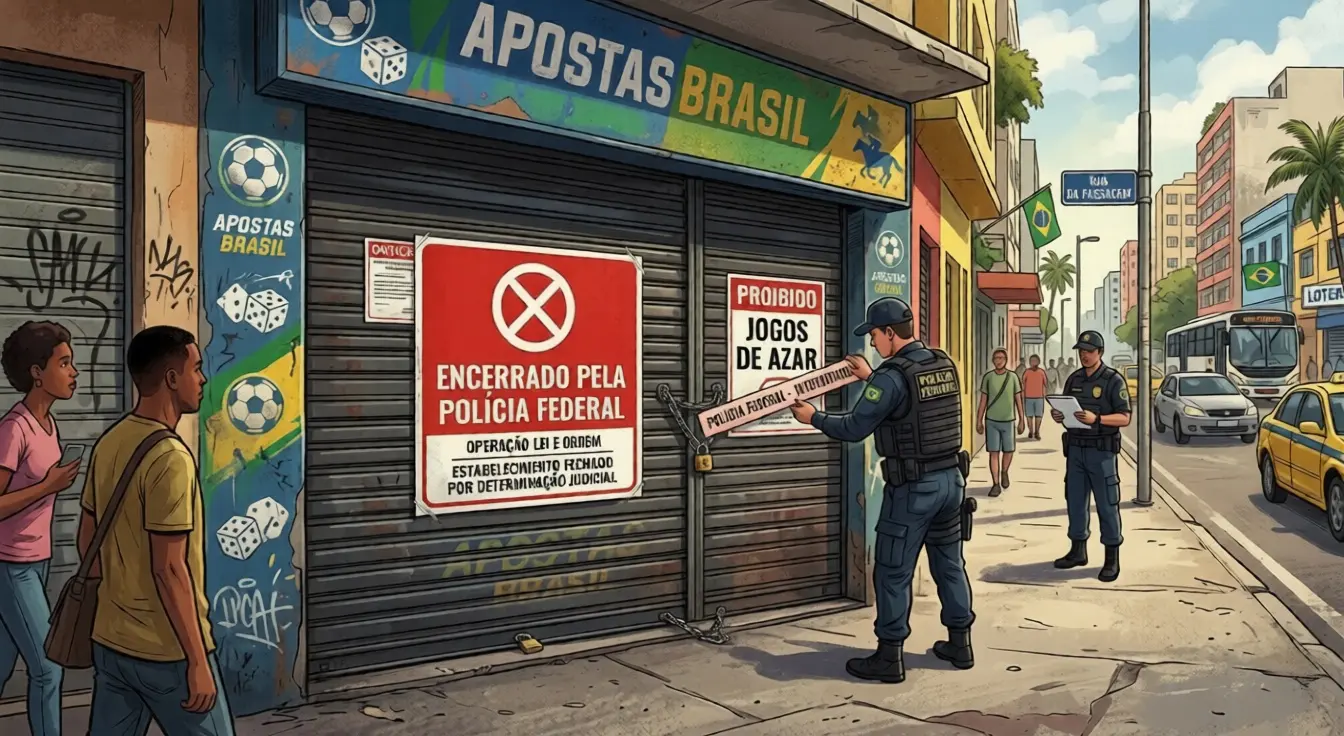
Brazil’s Potential Ban on Bookmakers has quickly become one of the most closely watched stories in global iGaming, after President Luiz Inácio Lula da Silva again said he would like to shut down bookmakers in the country. His latest remarks, made on morning television, have sharpened an already tense debate around sports betting, regulation, taxation, and the social role of gambling in Latin America’s largest market.
For operators, suppliers, sports stakeholders, and policy observers, the significance goes well beyond a headline-grabbing soundbite. Brazil only recently put its regulatory framework for online gaming and sports betting into effect at the beginning of 2025, yet the country is already facing a renewed political argument about whether the market should be narrowed sharply, or even pushed toward a more restrictive future.
Lula’s comments came during an appearance on ICL News, where he criticized what he described as an uncontrolled betting environment. Speaking to hosts Eduardo Moreira and Leandro Demori, he said, “It’s not possible to continue with this unbridled game in this country.” That statement matters because it connects his broader political language to a specific concern, the idea that the sector’s growth has outpaced what he sees as acceptable social limits.
This is not an isolated outburst. The news article makes clear that Lula had already delivered a message last month about the rapid growth of online gambling, linking that expansion to financial and social problems he believes the industry spreads. In other words, the current moment is less a sudden pivot and more an escalation of an increasingly public anti-gambling position.
Why Lula’s latest comments matter now
Timing is everything in regulation, and in Brazil the timing is especially revealing. The country entered 2025 with a fresh regulatory framework for online gaming and sports betting, a milestone that many in the sector viewed as a defining step toward a more structured and investable market.
Yet the same president who signed Bill PL 2626/2023 into law at the end of 2023 is now openly questioning the value of the sector itself. That contradiction is one of the most important features of this story. Lula did approve the law, but he also used a partial veto to water down parts of it, including blocking certain taxation exemptions.
That detail is crucial because it shows a pattern. Lula did not simply inherit a regulated market and then decide he disliked it. Instead, he was directly involved in shaping the legal environment, while also signaling discomfort with the industry’s expansion and economics.
At the start of January 2026, he also approved a gradual tax rise that will leave operators facing a 15% tax rate by 2028. Taken together, those moves suggest a regulatory philosophy that is not merely about legalization, but about restricting incentives and tightening the operating environment over time.
The deeper political message behind Brazil’s bookmaker debate
Lula’s most revealing quote may be the one where he framed the issue in moral and practical terms. He said he had been discussing the betting business for 15 days and posed a direct question, if betting causes the harm he believes it causes, why not end it, or at least regulate it so there are not so many operators in Brazil, if they have any use.
That line does two things at once. First, it leaves the door open to an outright crackdown in political rhetoric. Second, it introduces a less absolute but still significant policy alternative, a market where tighter regulation reduces the number of bookmakers rather than eliminates them entirely.
From an iGaming analysis standpoint, this is often how major regulatory shifts begin. Political leaders start with a broad public criticism, then move toward arguments about oversupply, public interest, and harm reduction. Even when a full ban does not materialize, the rhetoric can still produce meaningful consequences through licensing limits, taxation changes, or tougher compliance expectations.
Lula also pushed back on one of the industry’s most familiar defenses, the argument that betting is vital to football financing. His answer was blunt. “Football survived for more than a century without them.” For Brazil, where football is both a commercial engine and a cultural institution, that statement lands with unusual force.
A market shaped by legalization, then challenged by backlash
One of the central tensions in the Brazilian market is that legalization and backlash are arriving almost at the same time. The foundations for legal sports betting were laid during the presidency of Michel Temer, not Lula. Still, Lula’s role has been decisive in turning that earlier opening into a more fully defined legal framework.
Now, however, the debate is shifting from how to regulate betting to whether the sector should exist in its current form at all. That is a major change in narrative, and it matters for every stakeholder trying to assess Brazil’s medium-term direction.
For operators, this means regulatory certainty may remain fragile even after formal market rules are in place. For investors, it is a reminder that legal market creation does not always equal long-term political consensus. For the wider public, the debate highlights how quickly gambling can move from being seen as a source of tax revenue and entertainment to being portrayed as a social risk.
Election year pressure could reshape the conversation
The 2026 political calendar adds another layer of significance. According to the source article, Lula appears to be building part of his campaign foundations on the idea that public opinion is turning against the gambling industry in some quarters. That matters because gambling regulation often becomes more volatile when it intersects with electoral messaging.
Lula has confirmed his desire to run for a fourth term as President of Brazil, although his candidacy has not yet been formally confirmed. Even without a formal campaign launch, his language suggests that betting could become a politically useful issue, particularly if criticism of the sector resonates with voters concerned about household finances and wider social impacts.
If Lula is returned to office, the article notes that the chances of regulatory reversals within gaming and betting would increase markedly. This is perhaps the clearest forward-looking signal in the source material. It does not guarantee a ban, but it does indicate that future restrictions could become a more realistic policy path if political conditions align.
What the industry should take from Lula’s remarks
Industry leaders have already pushed back against the president’s increasingly sharp rhetoric, and these latest comments are unlikely to calm concerns. The immediate challenge is not just reputational, it is strategic. Businesses operating in or targeting Brazil must now plan for the possibility that the regulatory debate becomes more adversarial, more politicized, and more fluid.
There are several important takeaways from the current situation.
- political risk is rising, because Lula’s statements are becoming more direct and more hostile to bookmakers,
- regulatory tightening remains plausible, because he explicitly raised the option of reducing how many betting operators are in Brazil,
- tax pressure is already real, because the approved gradual increase will bring operators to a 15% tax rate by 2028.
Even if a full shutdown remains unlikely in practical terms, rhetoric from the presidency can still influence regulators, public opinion, and legislative appetite for tougher controls. In iGaming, policy risk rarely arrives all at once. More often, it builds through a series of signals, and Brazil is sending several at the same time.
The broader iGaming lesson from Brazil
Brazil’s case speaks to a wider truth about the global online gambling industry. Regulation is never just a technical framework. It is also a social contract, shaped by political mood, cultural attitudes, and public perceptions of harm and value.
That is why this story matters beyond Brazil. A market can move from legalization to skepticism very quickly if policymakers conclude that growth is too fast, controls are too weak, or the industry’s social costs outweigh its benefits. Lula’s remarks capture exactly that tension, especially when he questions whether bookmakers have any real public use.
For casual readers, this may look like a conflict over betting. For industry professionals, it is really a conflict over legitimacy. Can bookmakers present themselves as sustainable and socially acceptable participants in digital entertainment, or will they increasingly be framed as a problem requiring rollback?
What happens next
The most immediate consequence of Lula’s comments is uncertainty. They do not amount to a legal ban, and the source article does not say that a formal shutdown process has begun. But they do deepen the sense that Brazil’s betting sector is entering a more politically sensitive phase.
In practical terms, the next chapter will likely depend on how strongly this message connects with voters, how aggressively industry leaders defend the sector, and whether policymakers translate presidential rhetoric into new proposals. What is already clear is that Brazil’s regulated betting market is not settling into quiet maturity. It is being pulled into a larger national debate about economics, public welfare, and political identity.
Brazil remains one of the most important markets in global iGaming, but its future direction now looks less straightforward than many expected when the regulatory framework took effect in 2025. Lula’s repeated wish to shut down bookmakers may not yet be policy, but it has become a powerful signal, and in this industry, signals matter.