La Liga developments put leadership under the spotlight
Money, power and continuity have collided again in Spanish football, and at the heart of the latest La Liga developments stand two men whose futures could shape the game in Spain for years to come Javier Tebas, the long-serving president of LaLiga, and Luis de la Fuente, the coach who has taken the Spanish national team back to the summit of Europe.
On one side, Tebas has secured a dramatic pay rise, one that underlines just how central he is to the league’s current business model and future vision. On the other, De la Fuente has been rewarded with a long contract extension after guiding Spain to major silverware and restoring belief in La Roja.
Together, these stories tell us a lot about where Spanish football is heading, how it values its leaders, and what it expects from them when trophies, reputations and millions of euros are on the line.
Javier Tebas and a salary that shakes Spanish football
The Extraordinary Assembly of LaLiga has turned the spotlight firmly on Javier Tebas. The president put forward a proposal to the First and Second Division clubs to increase his own remuneration, a move that has now pushed his annual earnings into truly eye-catching territory, with the figure rising from €3.36 million last season to a potential €5.47 million a year.
The increase is striking not just because of the raw numbers but because of how Tebas’ stance on executive pay has evolved. When he first took office at LaLiga, he openly criticised the salary levels of his predecessor and even cut his own pay by a few thousand euros. That early symbolic gesture of restraint has now given way to a package that many inside and outside Spain will scrutinise closely, especially as the league continues to navigate a demanding financial landscape.
What the clubs approved is not a simple fixed salary bump. Tebas’ base pay remains at €2.19 million, according to reporting from El Español, but layered on top are performance-related variables that can propel his income to historic levels within Spanish sport and beyond. In total, the new structure represents an increase of around 57 percent compared to his previous compensation.
How Tebas’ new salary is structured
The financial architecture of Tebas’ deal reveals how LaLiga’s leadership sees the presidency, not just as an administrative role but as a performance-driven position more akin to a chief executive in the corporate world. The fixed salary is the foundation, yet the most eye-catching part lies in the bonus structure that could see the president paid more than the average of Ibex company presidents, even though LaLiga’s turnover is eight times smaller.
Two key components define these bonuses. The first are the qualitative variables, which could reach up to €1.97 million. These are typically linked to strategic goals, reputational management and long-term projects, areas that often do not show up in short-term financial statements but weigh heavily on the future of the competition.
The second block consists of quantitative variables that may climb as high as €1.31 million. These are usually tied to more easily measurable targets, whether commercial performance, broadcasting metrics or financial stability. Combined, these layers are what allow Tebas to move from a solid executive wage into the realm of the highest-paid sports administrators in Europe.
It is this leap that has generated debate. If Tebas hits his targets, he is in line to earn more than €5 million this season, a figure that will be compared constantly with club budgets, player salaries and the economic issues facing many teams lower down the Spanish football pyramid.
Club reaction and the politics behind the vote
The salary proposal did not pass unanimously, and the way it was approved tells its own story about the current political map of Spanish football. Of the clubs present, 40 Spanish sides from the First and Second Division backed the increase, giving Tebas a powerful mandate and underlining just how many institutions feel that his stewardship has safeguarded and grown their interests.
But not everybody is on board. At least two clubs voted against the change. One of them, Real Madrid, had already publicly announced its opposition, continuing a long-running tension between the club and the league president. Because the vote was conducted by secret ballot, the identity of the second dissenting club remains unknown, but its presence hints at undercurrents of dissatisfaction, or at least discomfort, with such a dramatic pay escalation at the very top of the organisation.
This divide is about more than just numbers. It cuts to the heart of how the power balance between the league and its biggest brands is evolving. For supporters, the optics are equally important. Seeing a league president’s earnings surpass those of many business leaders, while some clubs battle to stay afloat, naturally fuels discussion about priorities and transparency in Spanish football governance.
From early austerity to potential long-term riches
When Tebas first ascended to the role of LaLiga president, his decision to slightly trim his own salary was framed as a signal of modesty and responsibility. Over time, though, that initial gesture has faded, replaced by a model in which his pay is directly linked to how far he can push the league commercially and competitively, at home and abroad.
The latest modification takes this logic to its conclusion. If he continues to be re-elected and the new framework remains in place, Tebas could secure a salary that is multiplied by as much as 15 over the next decade, turning his tenure into one of the most lucrative in European sports administration. Supporters and critics alike will interpret this differently. For some, it is a sign of stability and ambition. For others, it raises probing questions about executive pay scales in a league where financial inequalities between clubs remain a constant talking point.
Yet the clubs’ endorsement shows that, for now, a large majority still regard Tebas as the figure best positioned to steer LaLiga through a period of intense competition with other European leagues and evolving broadcast markets. His future, like his salary, is tightly bound to how LaLiga performs in an ever more globalised football economy.
Luis de la Fuente and Spain’s bet on continuity
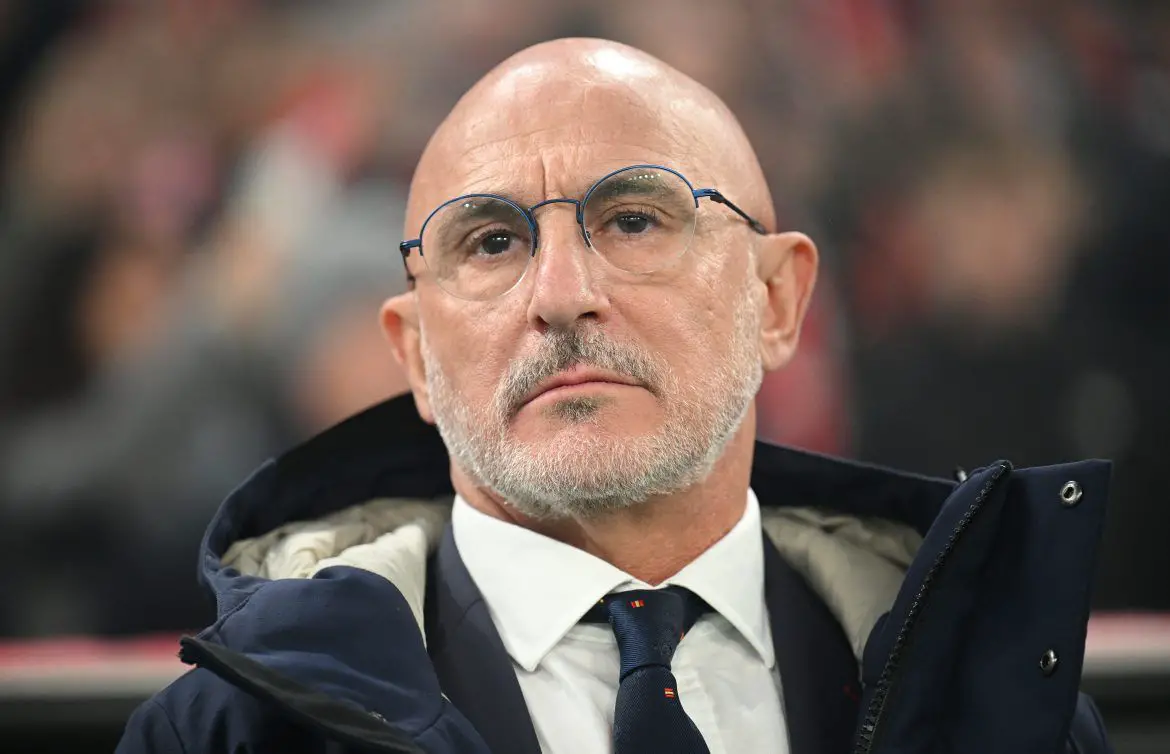
While Tebas’ pay rise has sparked debate over money and power in the domestic game, the Spanish national team has delivered a story of sporting success and continuity. The Royal Spanish Football Federation has announced that Euro-winning coach Luis de la Fuente has renewed his contract, committing his future to Spain until 2028.
The new agreement ensures De la Fuente will remain in charge through two of the biggest tournaments on the football calendar, the 2026 World Cup in the United States, Mexico and Canada and the next European Championships in 2028. For a national side that has re-emerged as a force in continental football, this represents a bet on stability after years of searching for the right post-golden-generation formula.
De la Fuente’s case illustrates a different kind of value judgement. Instead of financial reward dominating the headlines, the focus is on sporting results and the emotional reconnection between La Roja and its supporters. That he has earned this trust says a great deal about what has happened on the pitch since he took the reins in 2022.
A remarkable record and a return to glory
Since becoming national coach in 2022, De la Fuente has quietly put together an outstanding record with Spain. The team enjoys an impressive 82 percent win rate under his stewardship, a statistic that underpins both his renewal and the enthusiasm around his long-term project. In the unforgiving world of international football, where short cycles and quick judgements are common, such consistency is gold dust.
Beyond the numbers, though, lie the trophies that have ended debates about the direction of the national team. De la Fuente has taken Spain to the conquest of the most recent edition of the European Championship and the UEFA Nations League, re-establishing the side among the elite of the international game. For a country that had grown accustomed to success during its golden era, these triumphs felt like a rediscovery of identity as much as the lifting of silverware.
It is no surprise, then, that Spaniards are widely expected to be thrilled by the news. The coach who led their nation back to glory will continue to shape its destiny for years to come, and that continuity offers fans something they crave nearly as much as victory itself a sense of direction, a clear idea of where their team is heading.
The symbolism of Spain’s long-term commitment
The Royal Spanish Football Federation wanted to underline this commitment, and it has done so not only with the length of De la Fuente’s new contract but also with the ceremony that accompanies it. An official event is scheduled for this afternoon at 5 pm Spanish time to present the renewal to the public and the press, an occasion where the coach will speak about the journey so far and the challenges ahead.
This kind of formal presentation is about more than pageantry. It signals that the federation sees De la Fuente as the central figure in a project stretching at least to 2028, and it invites fans to buy into that vision. By putting him front and centre, the RFEF is effectively saying that the rebuild is complete and that it now has the man it trusts to guide Spain through an intensely competitive international cycle.
In a landscape where managers are often treated as short-term fixes, the timing and clarity of the renewal cut against the trend. De la Fuente is being given the time and authority to develop a coherent squad and style, something that can pay off handsomely when tournaments hinge on details, trust and the familiarity built over years together.
Two decisions that frame the future of Spanish football
Place these two developments side by side and a broader picture emerges. On one hand, LaLiga doubles down on Javier Tebas with a contract structure that could make him one of the best-paid sports executives in Europe, betting that his aggressive, commercially driven stewardship is what the league needs to keep pace with its rivals.
On the other, the national team secures the services of Luis de la Fuente through 2028, recognising that results and trophies are the truest currency in international football. Where Tebas’ story is defined by financial ambition and internal politics, De la Fuente’s is marked by on-field success and the emotional connection he has rekindled between La Roja and its fans.
Together, these moves chart the contours of Spanish football’s immediate future. At the league level, governance, revenue and executive accountability will remain hot topics as Tebas’ pay comes under continued scrutiny. At the national team level, attention will turn to how far De la Fuente can take a group that has already shown it can win on the biggest stages, with the 2026 World Cup and Euro 2028 now forming the backbone of his mission.
What it all means for fans and the game in Spain
For supporters, the reactions to these stories may diverge, but they speak to the same underlying theme who holds power in Spanish football, and how is that power measured. Tebas is judged in boardrooms and assemblies, his value quantified in broadcasting contracts, sponsorship deals and financial controls, which now have a very direct impact on his personal earnings.
De la Fuente, by contrast, will continue to be judged on nights of tension and ecstasy, on penalty shoot-outs and tactical calls, and on whether Spain can turn promise into more silverware. His renewal offers a narrative that is easier for fans to embrace, one of hope and continuity under a coach whose methods have already brought the national side back to the top.
In a sense, these La Liga developments are two sides of the same coin. One shows how the institutions that govern the game in Spain are choosing to reward leadership at the strategic level. The other reflects a renewed faith in a coach who has delivered joy to millions and given shape to a new era for La Roja. Between them lies the complex, often turbulent, always compelling story of Spanish football today.