Xabi Alonso under fire at Real Madrid and the battle for his future
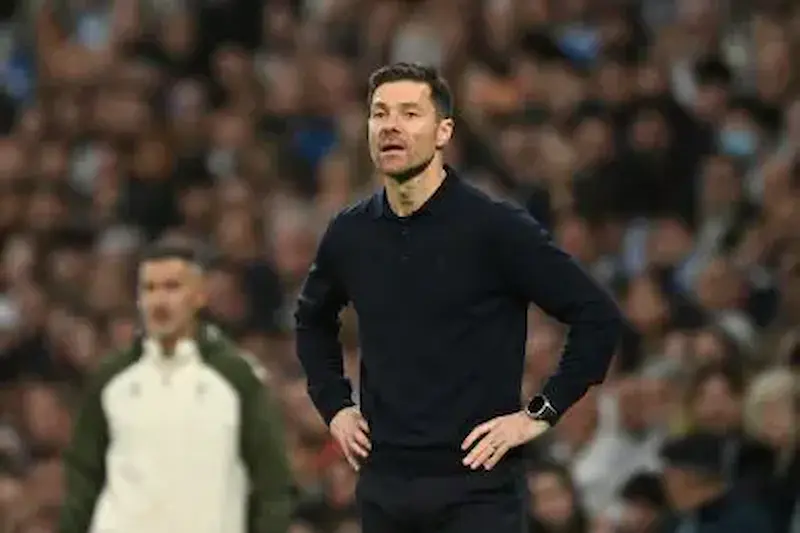
In the space of a few turbulent days, the debate over Xabi Alonso future at Real Madrid has turned from background noise into the defining storyline of the club’s season. A damaging home defeat, a restless board, a divided public and a looming Champions League showdown with Manchester City have converged into a perfect storm around the Basque coach.
From Bernabeu hero to the eye of the storm
Xabi Alonso did not arrive at the Santiago Bernabeu as a stranger. As a former midfield metronome of the Galactico era, he understood the building, the expectations and the demand for constant winning. Yet seven months into his tenure as coach, his position is being openly discussed at board level, his every word parsed for hints of doubt.
The 2-0 loss to Celta Vigo on Sunday was more than a bad result, it was, in the words of local press, a night that “plunged everything into uncertainty.” Coming just days after a convincing 3-0 win over Athletic Club, it felt like a step backwards that the hierarchy could not ignore. The defeat left Real Madrid four points behind Barcelona in LaLiga and sharpened criticism of an increasingly disjointed team.
The Celta defeat and a crisis of identity
Real Madrid did not just lose to Celta Vigo, they unravelled. Reduced to nine men, they looked vulnerable in ways that make presidents and fans alike deeply nervous. This was not a single freak result, but another data point in a worrying trend of flat, idea-starved displays.
In the league, Madrid have just one win in their last five games. Across competitions, they have suffered a 1-0 Champions League defeat at Liverpool and dropped points against Rayo Vallecano, Elche and Girona. For a club that measures itself in trophies, such a run is not simply poor form, it is a threat to the very narrative of the season.
Inside the boardroom Real Madrid weigh their options
After the Celta loss, president Florentino Pérez convened the board to talk specifically about the manager’s future. According to ESPN reporting, the meeting was as much about how Madrid are playing as about where they sit in the table. The 3-0 win over Athletic Club had briefly calmed nerves, but Celta’s visit restored a sense of alarm.
Sources told ESPN that the board are already considering alternatives, with the result against Manchester City framed as a potential turning point. The names on the table are both familiar and politically sensitive, a reminder that at Madrid, decisions are as symbolic as they are tactical.
The shortlist Alvaro Arbeloa, Zinedine Zidane and a distant Jurgen Klopp
Multiple reports point to Alvaro Arbeloa, the current Real Madrid Castilla coach, as the leading candidate to take over on an interim basis if Alonso is removed. He has been climbing the youth ranks with good results and is held in high regard by Pérez, who values his strong identification with the club’s culture.
Zinedine Zidane, unsurprisingly, appears again in the conversation. ESPN list him among the options the board have discussed, while other outlets highlight the admiration he still commands internally. Yet Diario AS push back on the idea that a third Bernabeu spell is imminent, reporting that nobody at the club is actively considering reaching out, with Zidane focused on the France national team job in 2026.
Jurgen Klopp’s name adds another layer of intrigue. The former Liverpool manager is “very well regarded” at Madrid and appears on internal lists of admired options. But reports stress that any move is improbable, with Klopp supposedly content in his role as Chief of Global Football Development at Red Bull and, in theory, retired from day-to-day management.
The Manchester City game that could define a reign
All roads now lead to Wednesday night at the Bernabeu, when Real Madrid host Manchester City in a Champions League tie that feels less like a group-stage meeting and more like a referendum on Alonso’s project. The consensus around the Spanish capital is stark, if Madrid “slip to defeat,” the manager could be on his way out.
Alonso himself did little to dampen the drama in his pre-match press conference at Valdebebas, but he refused to sound panicked. He described himself as “calm,” insisting that this is the kind of pressure any Real Madrid coach must be able to live with and even embrace.
“As Real Madrid coach you have to be ready to deal with these situations with calm,” he said. “That’s how I feel. I’m excited about what’s next, starting tomorrow, after the anger there was [after Celta], which is normal.”
In a club where narratives flip on a single night, he added a line that will resonate with every Madridista who has lived through previous crises, emphasising how “things can change quickly in football.”
Do the players still back Xabi Alonso
One of the most delicate questions hanging over this Real Madrid is the state of the dressing room. Several Spanish outlets have suggested that the squad have not truly connected with Alonso, describing a lack of affection and respect after seven months in charge. Cadena SER outlined concerns from the hierarchy over his limited relationship with the group and the team’s inability to fully grasp his tactical ideas.
ESPN’s reporting from inside the club paints a more nuanced picture. There is criticism from above of Alonso’s squad management, including frustration over the stalled contract renewal of Vinícius Júnior and concerns about the performances of Jude Bellingham and Fede Valverde. At the same time, sources in the dressing room speak of a shared sense of guilt, admitting that the players have not fully understood the methods of Alonso and his staff.
Perhaps most telling, those same dressing-room voices suggest the coach may even have been too lenient recently. At a club accustomed to strong internal leaders, the absence of figures such as Luka Modric, Lucas Vázquez and Dani Carvajal has left a void on and off the pitch that Alonso has struggled to fill.
Aurelien Tchouameni steps forward in defence of the coach
Into this swirl of speculation stepped Aurélien Tchouameni, who cut through the noise with a candid defence of his manager. Speaking alongside Alonso before the City game, the French midfielder placed responsibility squarely on the players’ shoulders for the Celta defeat and recent stumbles.
“In the Vigo game, for sure the coach had a good game plan,” Tchouameni said. “But in the end, we the players are on the field. If we’re at our level, we have more chance to win these games. If we lost 2-0, there’s a problem for us on the pitch, with the intensity. It isn’t the fault of the coach.”
Tchouameni acknowledged that the team must “improve” and play with “maximum intensity” if they are to win games like the one coming against City. For Alonso, such public backing from a key starter is invaluable at a moment when every facial expression in the tunnel is being read as a verdict on his leadership.
Guardiola’s unexpected support for a former protégé
Adding another plot line to this European tie is the presence on the opposite bench of Pep Guardiola, a man who has influenced Alonso’s coaching philosophy and watched his growth closely. Ahead of the clash, Guardiola offered a striking defence of his Spanish counterpart.
“Being Real Madrid’s manager is the hardest job in football,” Guardiola said. “If I performed the way I did last season as Real Madrid’s manager, I’d have been sacked in 6 months.”
It was more than just a sound bite. It was a reminder from one of the era’s great managers that context matters, that even the most gifted coaches can look fragile in an environment where the bar is as high as it is unforgiving. Coming from Guardiola, it sounded less like a rival’s dig and more like solidarity from someone who understands the weight of such a job.
The Endrick Felipe domino and a transfer plan on pause
Nothing underlines the fragility of a coach’s position like transfer plans being rewritten in real time. One of the clearest indicators of how seriously Real Madrid are taking the Alonso question is the situation of Brazilian teenager Endrick Felipe, whose future has become entangled with the fate of his current manager.
Frozen out by Alonso so far this season, Endrick had an agreement in place to go on loan to Olympique Lyon in January, complete with the symbolic number 17 shirt waiting for him in France. El Chiringuito reported that, with the forward struggling for minutes, everything was lined up for a move on the first of January.
But just as his camp was preparing to travel to Lyon this week to finalise a new home, something changed. According to that same reporting, someone at Real Madrid placed a call to Endrick’s entourage, asking them to cancel the trip and “wait” before making any commitments.
For a club that usually moves with surgical precision in the market, that pause is telling. If Alonso is sacked, his replacement could have a very different vision for Endrick, a 19-year-old chasing a place in Brazil’s World Cup squad and in need of game time. Holding off on confirming the loan is effectively an admission that the bench on which Endrick is currently sitting might soon belong to a different man.
Endrick’s minutes and the pecking order in attack
The numbers are stark. Since recovering from injury in mid-September, Endrick has played just 11 minutes all season, a brief cameo against Valencia. Under Carlo Ancelotti he was at least an impact substitute; under Alonso he has barely existed in the rotation.
Instead, the coach has generally preferred Gonzalo Garcia Torres as a more physical number nine off the bench. Garcia has made 13 appearances, registering one assist, although his influence has also waned since the Club World Cup, with only 163 minutes played in that period.
For Endrick, the situation is unsustainable if he wants to force his way into Brazil’s thinking. For Madrid, it is a delicate balancing act between present needs, future investment and the unstable footing of their current manager.
Tactical doubts and a team short of answers
Beyond results and man-management, there is a footballing debate raging over Alonso’s Real Madrid. Cadena SER have reported that executives are concerned about the lack of clear ideas, about a side that often appears short of answers and unable to fully impose the coach’s plans on matches.
Supporters have felt something similar. The stands have not fully warmed to Alonso since his arrival, an unusual chill for a former fan favourite. When the football flows at the Bernabeu, doubts are quickly forgiven. When it is disjointed, they harden into questions about whether the manager truly fits the club’s identity.
Alonso, for his part, has spoken openly about the “process” of adapting to the biggest job he has ever held. He stresses adaptation rather than wholesale change, insisting that understanding Real Madrid’s dressing room culture is a journey with good days and bad.
“I know the culture at Real Madrid, that’s why it’s the biggest job in the world,” he said. “You need to adapt, you need to learn. There’s a process, an interaction with the players. Some days are good, some days are not so good.”
Injuries and the missing leaders
No assessment of Alonso’s situation is complete without acknowledging the context of injuries. The latest blow came with Éder Militão, who suffered a rupture of the biceps femoris tendon in his left leg during the defeat to Celta Vigo. Club tests confirmed the diagnosis, with a recovery period estimated between three and four months.
For a player who has already endured serious knee problems in recent years, it is another cruel setback and a fresh complication for a coach whose squad has been repeatedly “depleted by injuries,” as ESPN put it. Defensively and emotionally, losing Militão is a major loss.
Layered on top of that is the absence, physical or symbolic, of long-standing leaders. The reduced presence of Modric, the voice of Lucas Vázquez and the injury to Carvajal have left a vacuum that Madrid have not yet filled. In such moments, the coach is asked not just to pick a team but to manufacture leadership, a task that becomes infinitely harder when results go against you.
Liverpool keep a close eye on events in Madrid
As Real Madrid grapple with Alonso’s future, another European giant watches with interest from across the continent. Liverpool, themselves in a state of flux under Arne Slot, have been heavily linked with their former midfielder as a potential successor if the Dutchman’s reign comes to an end.
Slot is under significant pressure with Liverpool languishing in 10th place in the Premier League, an alarming slump after romping to the title last season and spending heavily in the summer. A rift with Mohamed Salah, who was left out of a squad to face Inter after publicly criticising the club, has only deepened the crisis.
Into that void, multiple reports have inserted Alonso’s name. Indykaila and Caught Offside both suggest that if the Anfield job becomes available and Alonso is free, Liverpool would move quickly. Their shortlist reportedly includes Luis Enrique and Oliver Glasner, but the man at the top of the list is the Spaniard they once adored in midfield.
Alonso’s public stance on Liverpool and the Premier League
Pressed about the possibility of a Premier League return and specifically a future Liverpool role, Alonso has chosen his words carefully. He has not closed any doors, but he has also tried to affirm his commitment to the present.
“For sure, it’s something to consider with the English clubs, with my former club,” he admitted. “But for now, this is the place that I want to be, and in the future, you never know what can happen.”
It is a line he has repeated almost verbatim on more than one occasion. For Madrid supporters it may sound unsettling, an implicit reminder that he has options elsewhere. For Liverpool fans, it is a tantalising hint that the door to a reunion remains ajar.
He has been equally cautious when asked about Liverpool’s internal dramas, particularly the Salah situation. “Those are decisions they have made at Liverpool,” he said, refusing to pass judgement and noting that outsiders are inevitably missing key details.
The Vinicius flashpoint and questions of authority
Alonso’s man-management has been placed under the microscope, and one moment keeps resurfacing in the public conversation, his decision to substitute Vinícius Júnior during the Clásico against Barcelona and the Brazilian’s visibly angry reaction.
Critics point to that scene as evidence of a fragile relationship with one of the club’s most important players, especially in the context of Vinícius’ still unresolved contract renewal. The board have reportedly discussed Alonso’s handling of such key figures and the broader issue of “poor management of the squad.”
The coach himself, however, has refused to back down. Asked whether he would change his behaviour in light of Vinícius’ reaction, he was clear that he would not. What he sees on the pitch, he argued, has to dictate his decisions, regardless of status or sentiment.
A crossroads that defines the modern Real Madrid
Strip away the noise, and what remains is a club confronting a familiar dilemma with a new twist. Real Madrid have always demanded immediate success, but in recent years they have also spoken about continuity, about giving projects time to develop. Xabi Alonso, with his deep ties to the club and his growing reputation from Bayer Leverkusen, was supposed to embody that dual aim.
Now that vision is being stress-tested by results, by injuries, by the impatience of a fanbase that has known too much glory to calmly accept mediocrity. The board’s interest in internal solutions like Arbeloa suggests an attempt to keep some continuity of culture even if they change the man in the technical area. Their flirtation, however distant, with names like Zidane and Klopp betrays a lingering pull toward the comfort of proven giants.
For Alonso, everything narrows to the here and now, to Manchester City under the Bernabeu lights. Win, and he buys time, space and perhaps a renewed sense of belief in his ideas. Lose, and he risks becoming another cautionary tale about the scale of the Real Madrid job, another coach who learned the hard way that at this club, history and sentiment are luxuries that rarely survive a bad run.
Somewhere between the roar of the crowd and the silence of the boardroom, Xabi Alonso’s future is being written in real time. The only certainty is that, as he himself acknowledged, in football everything can change quickly. At Real Madrid, it often changes overnight.