
NCAA and college sports prediction markets under fire
NCAA and College Sports Prediction Markets have moved from a niche fintech curiosity to a front-page integrity flashpoint, after the NCAA formally urged the Commodity Futures Trading Commission to halt these markets in the wake of a major point-shaving and bribery case tied to college basketball.
The issue is not whether fans want more ways to engage with March Madness and Division I matchups. It is whether prediction market products that look and trade like sports betting can expand quickly without the guardrails that licensed sportsbooks are required to follow.
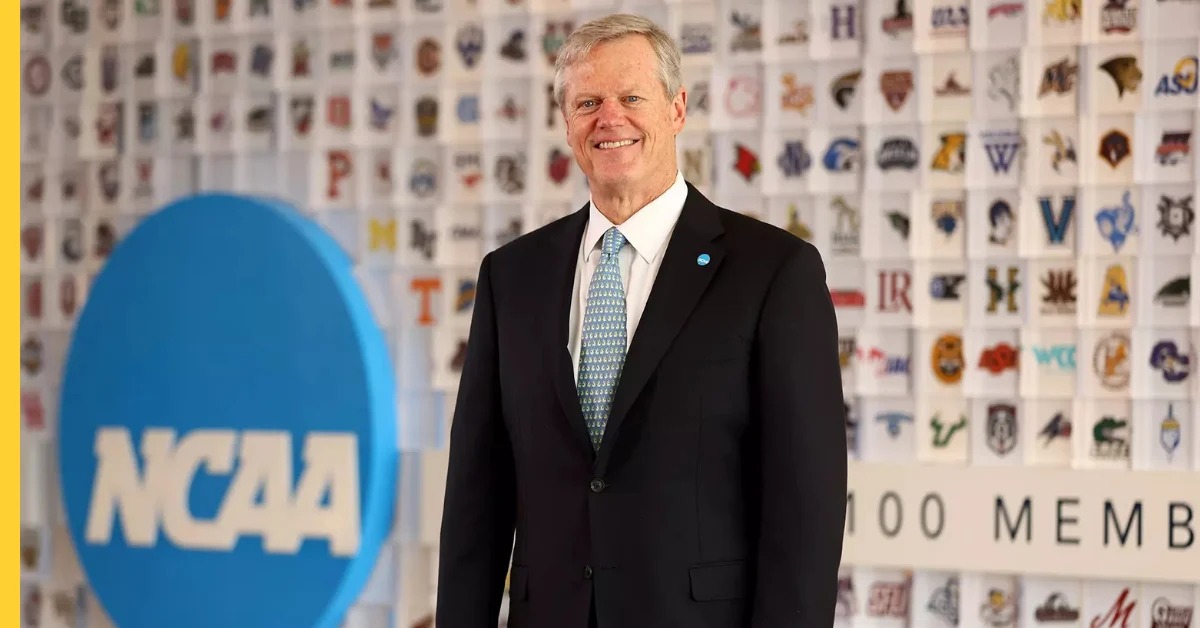
In a letter dated 14 January, NCAA President Charlie Baker asked federal regulators for a reset. His message was that the current patchwork approach leaves too much risk sitting with student athletes, and not enough responsibility sitting with the platforms that list and market college sports contracts.
What the NCAA asked the CFTC to do
Baker’s letter to the CFTC called for an interim suspension of collegiate sports prediction markets until appropriate protections are in place. The NCAA framed the request around athlete welfare and competitive integrity, while also making a broader point that these products increasingly resemble traditional sports wagering.
One of Baker’s most direct arguments was about standard setting, and who should set it. He wrote,
“Just as we need Congress to stabilise eligibility, we need federal regulators to stabilise these markets. The answer cannot be the status quo. We need one set of fair, transparent standards.”
That line matters for iGaming and for regulated betting because it signals a familiar tension. When new wagering adjacent formats appear, regulators and stakeholders often disagree on whether these products are meaningfully different, or simply the same activity wrapped in a different compliance regime.
Why prediction markets feel like sports betting to the NCAA
The NCAA pointed to the design of the contracts themselves. Baker highlighted that some operators offer contracts based on moneylines, point spreads, and totals. Some also offer their own versions of parlays, which in practice can pull consumer behavior toward high frequency, high volatility staking that looks a lot like sportsbook play.
From an industry analyst viewpoint, the product language here is the giveaway. Once a market is quoting a spread or a total and encouraging multi leg combinations, the user experience is no longer purely about forecasting an event outcome as an abstract probability. It becomes about pricing risk the way a sportsbook does, even if the platform routes that activity through a different regulatory lane.
The regulatory gap the NCAA says creates harm
The NCAA’s letter outlined several deficiencies that it believes expose both athletes and consumers to harm. The core claim is that prediction market platforms can operate without the safeguards commonly applied to licensed sports betting, even when the contracts closely track standard betting markets.
In Baker’s framing, the problem is not just philosophical, it is practical. He cited concerns including lower minimum age thresholds, limited advertising restrictions near campuses, and insufficient integrity monitoring tailored to sports manipulation risks.
For iGaming stakeholders, these points are not minor compliance details, they are the mechanisms that make a market defensible in the eyes of policymakers. When products scale quickly without comparable protections, it becomes easier for critics to argue that the industry is expanding risk, not entertainment.
Integrity monitoring is the centerpiece
The NCAA also warned that prediction market platforms are not required to coordinate with national governing bodies as sportsbooks must, which it argued reduces transparency around suspicious activity. In regulated sports betting, information sharing and integrity protocols are often central to detecting and deterring manipulation.
Even without going beyond what the NCAA stated, the operational implication is clear. If a platform is not built to collaborate with sports governing entities, then integrity detection can become fragmented, slower, and less actionable, especially when unusual activity centers on individual athlete performance.
Why college sports are uniquely sensitive
College sports betting already sits in a higher risk category for many regulators and integrity professionals because athletes are students, often younger, and generally less financially secure than professionals. The NCAA reinforced this angle by raising concerns that college athletes face heightened harassment and undue influence as markets focus more closely on their performance.
This is where prediction markets can amplify pressure. If contracts and trading chatter spotlight individual outcomes and in game performance, the athlete becomes a tradable variable, not just a competitor. The NCAA’s position suggests it sees that shift as a welfare issue, not merely a reputational one.
The integrity scandal that sharpened the NCAA’s case
The timing of the NCAA’s letter became even more consequential when federal prosecutors announced a sweeping enforcement action one day later. On 15 January, the US Department of Justice revealed charges against 26 individuals accused of orchestrating an international bribery and point shaving scheme involving NCAA Division I Men’s basketball games and contests in the Chinese Basketball Association.
According to authorities, professional bettors and intermediaries allegedly paid players to deliberately underperform so teams would fail to cover betting spreads, enabling conspirators to place profitable wagers. Prosecutors said the scheme began overseas in 2022 before expanding to US college basketball, ultimately involving more than 39 players across at least 17 NCAA programmes and dozens of manipulated games.
Bribe payments allegedly ranged from $10,000 to $30,000 per game, with millions wagered on fixed outcomes. Those numbers help explain why regulators and sports bodies treat integrity as a financial crime problem, not a sporting etiquette problem.
What the DOJ charges signal to regulators and operators
The Justice Department outlined significant potential penalties. A conviction for bribery related to sporting contests carries a potential penalty of up to five years in federal prison, followed by three years of supervised release and a fine that can reach $250,000. Separate convictions for conspiracy to commit wire fraud or wire fraud itself could result in a maximum sentence of 20 years in prison for each offence, along with three years of supervised release and a possible $250,000 fine.
For the iGaming ecosystem, enforcement actions like this do two things at once. They validate concerns about manipulation risk, and they raise the bar for anyone offering betting like products on college sports, especially if integrity monitoring is not clearly designed for that environment.
Industry pushback is already in motion
Baker’s letter followed almost immediately after the American Gaming Association and Indian Gaming Association contacted Congress about prediction markets. In both instances, a major point was how markets resembling sports betting have been introduced without the regulatory safeguards that govern licensed betting operators.
This alignment is notable because it shows that opposition is not coming only from the NCAA. It is also coming from established gaming stakeholders who are effectively arguing that prediction markets are competing with regulated sportsbooks, but without equivalent consumer protection, marketing rules, or integrity obligations.
Why this matters for the future of iGaming and sports wagering
The debate over NCAA and college sports prediction markets is quickly becoming a test case for how the US draws lines between financial products and gambling products. When a contract is priced like a moneyline, promoted like a bet, and combined into parlays like a sportsbook feature, policymakers may ask whether the label matters more than the function.
From a market strategy perspective, the NCAA’s request for a suspension is also a signal to innovators. If new formats want durable legitimacy, they will likely need to demonstrate safeguards that are at least as robust as those in regulated sports betting.
Based on the NCAA’s concerns, a credible framework would need to address the same categories of protection that sportsbooks often build around, including age thresholds, campus adjacent advertising restrictions, integrity monitoring, and formal coordination expectations with sports governing bodies.
Where the story goes next
The NCAA said it is willing to collaborate with federal regulators on a more robust framework, but it also wants an immediate pause while that framework is built. That posture suggests the organization believes the risk is already high enough that waiting for a slow policy evolution could cause real harm.
For readers tracking iGaming, compliance, or sports integrity, this moment is bigger than one letter and one scandal. It is the collision of two trends, rapid product innovation in wagering adjacent platforms, and escalating evidence that manipulation schemes can scale when oversight and information sharing are not airtight.
Whether the CFTC halts prediction markets or pushes for new standards, the underlying question will remain. Can college sports related prediction markets exist in a way that protects student athletes and preserves trust in competition, while also meeting public expectations for fairness, transparency, and enforceable integrity controls.
Key takeaways for operators and stakeholders
- the NCAA is asking the CFTC to suspend college sports prediction markets until protections are in place,
- the NCAA argues these markets resemble sports betting through spreads, totals, and parlay like products,
- federal charges tied to an alleged point shaving scheme involving Division I Men’s basketball underline the real world integrity stakes.
If 2026 becomes the year prediction markets are forced to choose between behaving like regulated sportsbooks or retreating from college sports, the outcome will shape not only how fans trade on games, but also how the next generation of iGaming adjacent products get defined, supervised, and trusted.