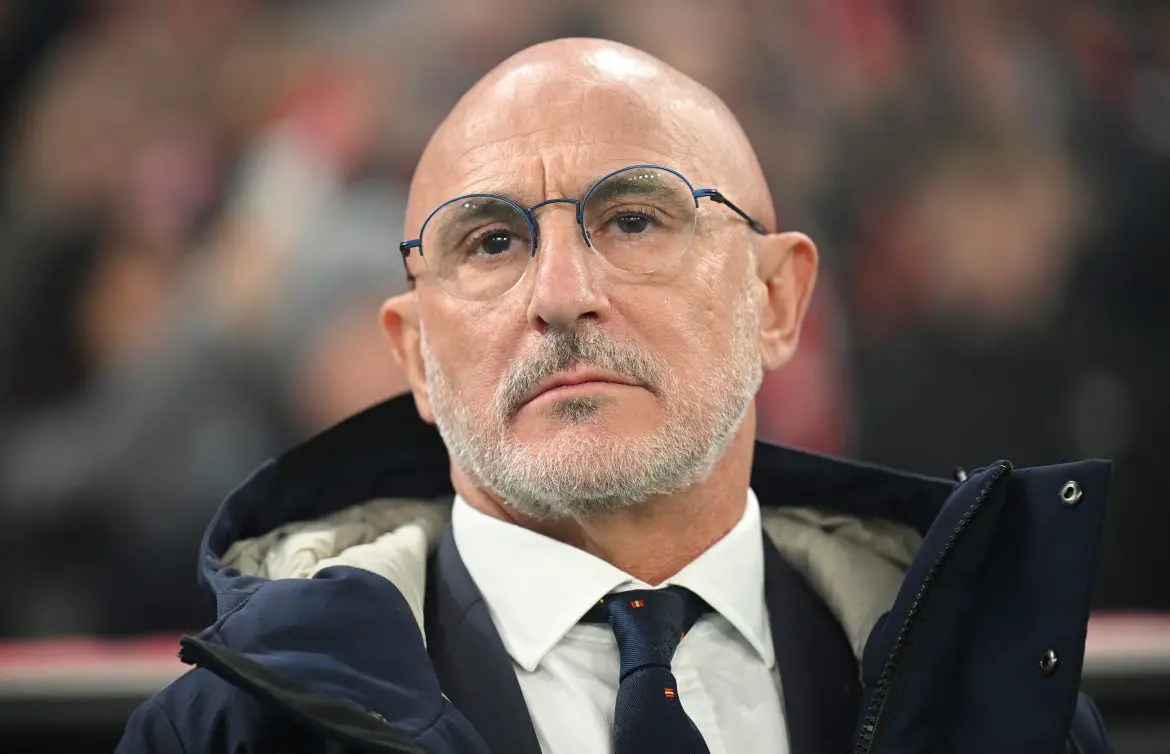
Luis de la Fuente Spain coach World Cup squad update
Luis de la Fuente’s activities as Spain coach have offered a revealing snapshot of where La Roja stand on the road to the 2026 World Cup. In the space of a few days, Spain’s manager has balanced the long view and the immediate pressure of selection, earning a contract renewal until 2028 while naming his final squad before this summer’s tournament in the United States, Mexico and Canada.
That combination matters. A renewal is not just a bureaucratic detail, and a squad list is never just a list. Together, they tell the story of a federation backing a coach who has already restored silverware and belief, and of a manager still willing to make difficult decisions even with the World Cup looming.
The Spanish federation confirmed that de la Fuente will remain in charge until after Euro 2028. For a national team coach, that kind of public trust is significant. It reflects what he has already delivered, most notably leading Spain to the European Championship title and the UEFA Nations League, while compiling an impressive 82% win rate since taking the role in 2022.
For supporters, the extension feels like a message of continuity at exactly the right moment. Spain are heading into the World Cup as one of the favourites, but they are also carrying uncertainty around injuries, form, and places still to be won. In that atmosphere, keeping the same hand on the wheel can be as important as any tactical tweak.
Why the renewal matters for Spain
De la Fuente’s new deal until 2028 is more than a reward for past success. It gives Spain a stable frame around one of the most delicate phases in international football, the stretch between a major triumph and the challenge of proving it was not a one-off.
Spain’s recent achievements have changed the mood around the team. The official announcement made clear that the RFEF sees de la Fuente as the coach who brought the national side back to glory. That is a powerful endorsement, particularly with the World Cup approaching and another European Championship cycle beyond it.
There is also a human dimension here. National team management can often feel temporary, even fragile. A run of bad results can alter everything. Yet de la Fuente now works with the knowledge that his employers are not judging him only on one training camp or one squad debate. That security can influence how bravely a coach plans for the future.
The final Spain squad before the World Cup
De la Fuente’s latest squad announcement was his final one before he names his World Cup group, and it came with enough intrigue to dominate the conversation. Spain will use the March international break for friendlies against Serbia at La Ceramica on March 27 and Egypt at the RCDE Stadium on March 30 after the planned Finalissima against Argentina was cancelled.
The cancellation itself was frustrating. De la Fuente admitted Spain wanted to play for a title and use the occasion to enjoy another big night with the players. But he also made clear that the bigger purpose was preparation, not nostalgia.
“The Finalissima was a match to win a title, but we were looking beyond that, preparing for the World Cup.”
That sentence captures the mood around this camp. Spain have not been together since November, and this window has become crucial for regaining rhythm, assessing new faces, and clarifying a hierarchy that is still not completely settled.
Spain squad at a glance
- Goalkeepers – Unai Simon, David Raya, Joan Garcia, Alex Remiro,
- Defenders – Pedro Porro, Pau Cubarsi, Dean Huijsen, Aymeric Laporte, Marc Cucurella, Alejandro Grimaldo, Marcos Llorente, Cristhian Mosquera,
- Midfielders – Rodri Hernandez, Martin Zubimendi, Pedri, Fermin Lopez, Carlos Soler, Pablo Fornals, Dani Olmo,
- Forwards – Lamine Yamal, Mikel Oyarzabal, Ferran Torres, Borja Iglesias, Yeremy Pino, Ander Barrenetxea, Alex Baena, Victor Munoz, Borja Iglesias.
The list reflects both continuity and opportunity. There are returns for Carlos Soler, Ander Barrenetxea, Yeremy Pino and Rodri Hernandez, while Pablo Fornals and Borja Iglesias keep their places. First call-ups went to Osasuna’s Victor Munoz, Arsenal defender Cristhian Mosquera, and Barcelona goalkeeper Joan Garcia.
The Joan Garcia decision and the goalkeeper debate
No call-up created more noise than the inclusion of Joan Garcia as a fourth goalkeeper. De la Fuente knew exactly what questions were coming. Was this necessary, would it disrupt chemistry, and what did it mean for the established pecking order of Unai Simon, David Raya and Alex Remiro.
His response was clear and, in its own way, revealing. He praised Garcia not as a novelty, but as a player long known to the Spanish setup through the under-21s. He argued that Garcia could add to the environment through work ethic, teamwork and competitiveness, and he pushed back strongly against the idea that this was creating a problem.
“Rules are made to be broken. He’s a great goalkeeper, we didn’t just discover that.”
For de la Fuente, the logic is simple. If Spain have strong options, that is not a crisis but a luxury. He even suggested that all four could still travel toward the World Cup process before one is eventually left out, noting that the expanded 26-man format allows room for unusual choices. The message was not about sentiment, but about keeping every lane open.
That says something important about his management style. He is willing to challenge convention if he believes the timing is right, and he is equally willing to defend his decision against external criticism. In an international setup where short camps leave little margin for uncertainty, conviction matters.
Dani Carvajal still in the picture but no guarantees
The other headline was impossible to ignore. Dani Carvajal, one of the veterans of Spain’s Euro 2024 success, was left out again despite being fit since January. For many supporters, the omission felt like a warning sign. For de la Fuente, it sounded more like a challenge issued to an established player he still values.
He did not close the door. In fact, he went out of his way not to. The Spain coach insisted that anyone missing from this list has not been ruled out of the World Cup, and when asked directly about Carvajal, he stressed that the full-back remains a very important player.
“Everyone knows what they have to do at home and we hope he’ll be even better so he can be with us.”
Those words carry weight. They suggest that de la Fuente’s hesitation is not about reputation, but about level. He wants Carvajal playing regularly and recovering the standards he showed at the Euros. The same standard was applied to Alvaro Morata, who was also told to keep working and prove it on the pitch.
There is a tough honesty in that stance. International football can be sentimental, especially with decorated veterans. But de la Fuente appears determined to make selection a matter of present readiness. Carvajal’s future with Spain is still alive, yet no longer protected by what he has done before.
Rodri returns as Spain regain a pillar
If Carvajal’s absence brought unease, Rodri Hernandez’s return brought relief. After his own injury crisis, the Manchester City midfielder is back in the squad, and Spain immediately look more complete because of it.
De la Fuente celebrated Rodri’s moment in simple but telling terms. There was no need for theatrical praise. Rodri’s importance to this team is already understood. His inclusion gives Spain control, calm, and authority in midfield, particularly valuable when other central options such as Fabian Ruiz and Mikel Merino are carrying fitness doubts.
Rodri’s comeback also sharpens the sense of competition elsewhere. Spain are no longer just filling spaces. They are weighing profiles and combinations with a World Cup in mind, and having Rodri available changes the balance of every possible midfield plan.
Fresh blood and national team allegiance
Another significant thread in de la Fuente’s recent activity has been his public confirmation that talented dual-nationality players have chosen Spain. In modern international football, that matters almost as much as a transfer coup.
Real Madrid midfielder Thiago Pitarch, eligible for both Spain and Morocco, has committed to La Roja according to de la Fuente. The 18-year-old has made a strong impact at club level over the last month, starting Real Madrid’s last five games, yet he has been called up to Spain’s under-19 team rather than rushed into the senior setup.
De la Fuente’s comments were warm but measured. He said Pitarch is very committed to the national team and that this makes Spain very happy, while also stressing respect for players who choose another country. It was a diplomatic answer, but also a confident one. Spain believe they have won an important decision.
Then there is Cristhian Mosquera, now with Arsenal and rewarded with his first senior Spain call-up. Colombia had been interested in bringing him into their fold, but de la Fuente made clear how highly he values the defender. He highlighted Mosquera’s season, pace, focus, and especially his versatility across centre-back and full-back roles.
That versatility could become one of the themes of Spain’s final pre-World Cup thinking. Tournament football rewards players who can solve multiple problems at once, and de la Fuente’s praise suggested Mosquera offers precisely that kind of flexibility.
Injuries cloud the picture ahead of the World Cup
For all the optimism around Spain, the squad also reveals the fragility of timing before a major tournament. Several notable names are missing through injury, and those absences will shape the conversation right up until the World Cup squad is announced.
Dani Vivian and Aleix Garcia are among the headline omissions compared to November, while Mikel Merino, Fabian Ruiz, Samu Aghehowa and Pablo Barrios are all injured. The most serious case is Aghehowa, who will miss the World Cup. Barrios is expected back in April, and Merino and Fabian are hoping to be fit in time to force their way into consideration.
Marc Pubill also missed out due to fitness concerns. De la Fuente said both club and national team medical information indicated the player had not fully recovered, adding that he does not take risks with players. That principle may not always satisfy supporters eager to see certain names included, but it does offer a consistent line of reasoning. Health first is not a slogan here, it is part of his selection policy.
What de la Fuente is telling us about Spain
When you place all of these developments together, a clear portrait emerges. De la Fuente is not coaching Spain as a curator of yesterday’s success. He is coaching them as a man trying to win the next tournament, and that means questioning assumptions even after lifting major trophies.
He is rewarding form in some areas, waiting for proof in others, and refusing to let reputation settle debates too early. The four-goalkeeper experiment, the patience over Carvajal, the embrace of Mosquera, the faith in Rodri’s return, and the commitment to nurturing Thiago Pitarch all point in the same direction. Spain are trying to arrive at the World Cup with options, balance and internal competition.
That is why the contract renewal feels so connected to the squad decisions. The federation is backing not only de la Fuente the winner, but de la Fuente the planner. They are endorsing a coach prepared to make unpopular calls if he thinks they improve Spain’s chances in June and beyond.
And there is still a sense of unfinished business in all of it. The cancelled Finalissima denied Spain a glamorous measuring stick against Argentina, but de la Fuente’s comments showed little appetite for self-pity. He sees this period as a chance to reconnect, recalibrate and test the edges of his group before the real examination begins.
The road to the World Cup now narrows
From this point on, every training session, every minute in the friendlies against Serbia and Egypt, and every update on injured players will matter more. The broad pool is shrinking toward a final cut, and de la Fuente has made it clear that there is still space for movement.
That uncertainty is uncomfortable for some players, but it can also be energising. Veterans know they must rediscover their sharpest level. Newcomers know the door is not merely open, but real. For a national side chasing the biggest prize in the game, that tension can be healthy.
Spain now move forward under a coach with a renewed mandate and a proven record, but also under a coach still searching, still testing, still asking hard questions. That may be the most encouraging sign of all for La Roja supporters. Success has not made Luis de la Fuente conservative. It has made him bolder.