Avanti Studios launch and the next wave of live casino
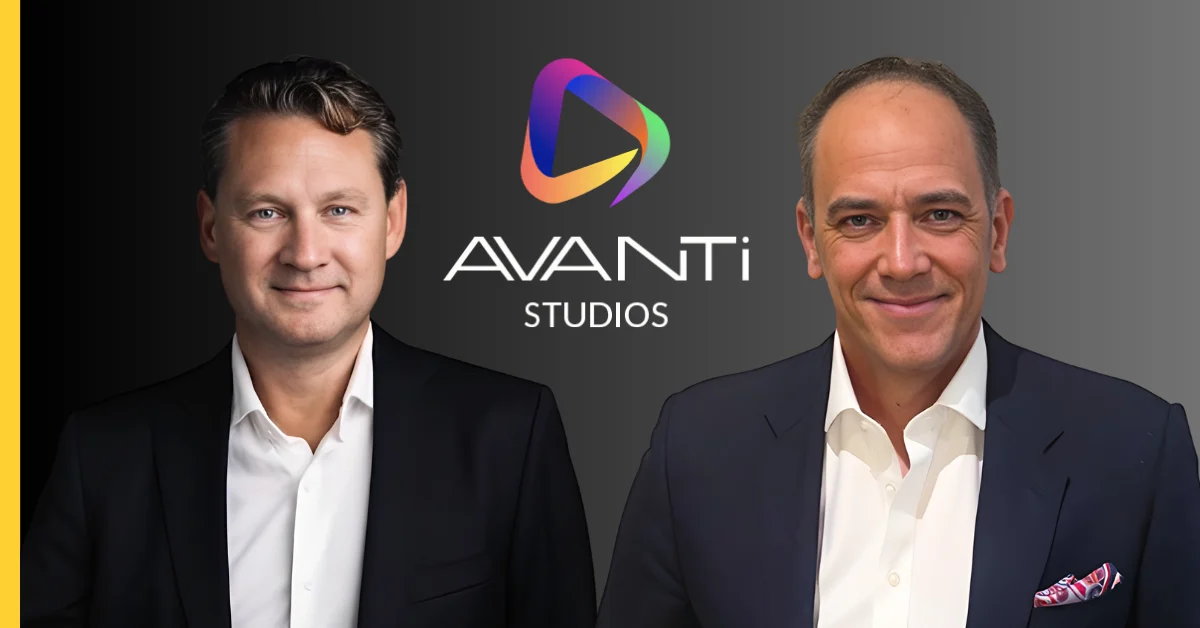
The Avanti Studios Launch is a notable moment for the live casino vertical, not because it introduces another supplier into an already crowded space, but because it puts a specific bet on what live casino should become next. Industry veterans Gustaf Hagman and Jonas Delin have launched Avanti Studios, a new motion capture live casino supplier that positions itself as a disruptive software provider designed to tackle what it calls the sector’s biggest pain points.
According to the launch press release, Avanti is targeting slow innovation, high operating costs, poor dealer presentation, limited low-stakes and localised tables, and costly scalability. Those are familiar complaints among operators and product teams, especially as mobile audiences set higher expectations for visual polish, fast iteration, and more tailored content. What matters is not that these issues exist, but whether Avanti’s approach meaningfully changes the cost and speed equation without undermining the trust that live casino depends on.
The founders’ track records add weight to the move. Hagman stepped down as CEO of LeoVegas just over a year after helping steward the company through its $607m acquisition by MGM Resorts. Delin stepped down as CEO and founder of LeoVegas’ former live dealer arm Authentic Gaming in April, which was acquired by Genting for €15m in 2019. In a sector where execution and distribution relationships often matter as much as technology, those resumes immediately place Avanti on the radar of both operators and competitors.
What Avanti Studios says it is building
Avanti’s proposition combines motion capture, 3D animation, and AI to deliver what it describes as an ultra-realistic gaming environment with lifelike digital clones as live dealers. The studio uses an in-house motion capture studio to record the precise movements, mannerisms, and techniques of experienced land-based croupiers. The promise is that this captures the authenticity of traditional table craft, then scales it through a digital pipeline that can be updated and customised more efficiently.
Hagman frames the strategy around a core truth of the category. He said player trust has always been the cornerstone of live casino success, and that Avanti aims to preserve that trust through genuine real-time multiplayer action while leveraging next-gen technology for flawless execution and scalability. In his words, this is live casino done better, authentic, reliable, and built for the future. The emphasis on trust is telling, because any attempt to modernise live casino must avoid the perception that the experience is becoming synthetic or less transparent.
From a product perspective, Avanti claims its dealers and environments can be customised to match an operator’s brand, language, appearance, dealing speed, and stakes. That set of knobs matters commercially because localisation and segmentation are often what differentiates a broad live lobby from one that feels curated. If Avanti can offer more granular control while keeping operations predictable, it can appeal to operators that want differentiation without building bespoke content from scratch.
Cloud streaming and Unreal Engine on mobile
A key part of the launch narrative is delivery technology. Avanti says the live experience is powered by a proprietary cloud-based Unreal Engine streaming protocol built specifically for mobile players, streaming high-definition video directly to the player. The combination of Unreal Engine and cloud streaming is an interesting signal, because it suggests Avanti wants a more game-like presentation layer while still maintaining the core multiplayer live casino loop.
In practical terms, mobile-first delivery is now a baseline expectation, but it is also where latency, bandwidth variation, and device constraints can expose weaknesses quickly. By highlighting a protocol built for mobile, Avanti is implicitly arguing that the next leap in live casino will come from tighter control over the rendering and streaming stack, not only from new game variants. That argument aligns with Avanti’s broader positioning around scalability and execution.
The pitch to operators is speed, control, and fewer bottlenecks
Delin’s quote captures the commercial thesis. He said traditional live casino has been slow to embrace innovation, and that Avanti puts technology at the centre, eliminating human error and operational bottlenecks so operators can focus on growth while providing the best possible player experience. He added that the model enables rapid game launches, continuous feature updates, and game innovation at a pace the industry has never seen in this vertical.
There are two important implications in that framing. First, Avanti is treating the live casino supply chain as a software problem as much as a studio problem. Second, it is suggesting that live casino operations contain friction points that are expensive to scale, whether in staffing, physical setups, or the time it takes to roll out new tables and localised experiences. If those assumptions hold, the real competitive edge is not simply better visuals, it is faster iteration cycles that let operators respond to player behaviour in near real time.
At the same time, Avanti is careful not to present this as a purely automated product. The motion capture approach is rooted in the performance of experienced land-based croupiers, and the experience is still described as genuine real-time multiplayer action. That combination is likely deliberate, because it protects the narrative that live casino is not just another RNG product with a new skin, it remains a social, trust-based format with a shared table dynamic.
Rollout plans and the early game slate
Avanti said it is in advanced talks with leading operators, with its official rollout beginning in Q1 2026. The initial portfolio is planned to include multiple Live Baccarat and Blackjack variants, Dragon Tiger, and localised Top Card games. From a market entry standpoint, that mix makes sense because it covers globally familiar live staples while also leaving room for localised table formats that can be positioned to specific regions and player segments.
Avanti also stated that games will launch in regulated markets worldwide, starting in Spain with Toro vs. Matador Live and Live Blackjack. Spain as a starting point is notable because it is explicitly framed as a regulated market launch, which signals a compliance-first posture. For operators, regulated market readiness is not a marketing add-on, it is the entry ticket, and it can shape everything from game presentation to technical audits and ongoing change management.
Why this launch matters for the live casino category
The live casino sector has historically balanced two competing forces. On one side is the expectation of authenticity, human presence, and clarity of outcomes. On the other is the pressure to modernise the user experience, reduce cost to serve, and tailor content for more fragmented audiences. Avanti’s launch positions itself directly at that intersection, arguing that you can preserve trust while rebuilding the production model using motion capture, 3D animation, AI, and cloud streaming.
The pain points cited in the press release read like a checklist of what operators increasingly complain about when live casino becomes a margin and roadmap challenge rather than a pure revenue driver. These include slow innovation, cost-heavy operations, and limited ability to offer low-stakes or localised tables at scale. If Avanti can meaningfully reduce the time and cost required to launch or customise tables, it could change how live content is planned, budgeted, and iterated, especially for brands that rely on differentiation to compete in mature regulated environments.
There is also a brand and talent story embedded here. Hagman and Delin are not new entrants trying to learn distribution and compliance from scratch. The story of LeoVegas’ acquisition by MGM Resorts, and Authentic Gaming’s acquisition by Genting, underlines that these founders have already built businesses that strategic buyers valued. For the market, that raises expectations, because the launch is effectively saying this is not an experiment, it is a deliberate attempt to set a new benchmark.
Key themes to watch as Avanti moves into market
The most interesting part of the Avanti Studios Launch is not the announcement itself, it is the set of measurable claims that will become testable as Q1 2026 rollout begins. If you are an operator, investor, or competitor, the questions become less about buzzwords and more about outcomes and delivery cadence.
- customisation depth for brand, language, appearance, dealing speed, and stakes,
- mobile performance under real-world network conditions via its cloud-based Unreal Engine streaming protocol,
- release velocity, meaning whether rapid game launches and continuous feature updates materialise at the pace Delin suggests.
Another theme is market positioning. Avanti is entering with classic table games such as baccarat and blackjack variants, plus Dragon Tiger, while also highlighting localised Top Card games and a Spain-first regulated launch featuring Toro vs. Matador Live. That combination suggests a strategy built around both familiarity and localisation, which is often where retention is won in live lobbies. The risk, as always, is that operational promises collide with the realities of certification, integration complexity, and operator roadmaps.
Finally, there is the cultural dimension. Live casino has always been about more than rules and payouts, it is about performance, presence, and a sense of shared participation. By turning croupier craft into recorded motion data and translating it into lifelike digital clones, Avanti is effectively proposing a new kind of dealer identity, one that sits between human performance and digital replication. Whether players embrace that as more immersive, or question it as less human, will be a key signal for where the category can go next.
Hagman says player trust is the cornerstone of live casino success, and Avanti aims to preserve it through genuine real-time multiplayer action while leveraging next-gen technology for execution and scalability.
What this could mean for operators and the wider ecosystem
If Avanti delivers on its claims, the most immediate impact would be competitive pressure on the operating model of live casino. Faster customisation and lower-cost scalability would change how operators think about table segmentation, local language coverage, and low-stakes entry points. For example, limited low-stakes and localised tables were explicitly named as pain points, so addressing them could unlock new acquisition funnels and broader reach without diluting the premium feel of higher-stakes tables.
For suppliers, the launch is another sign that live casino is being pulled toward a software-like cadence. In that world, the winners are not only those with the largest studio footprints, but those who can ship updates frequently, personalise experiences reliably, and maintain consistent quality across devices. Avanti’s emphasis on eliminating human error and operational bottlenecks speaks directly to that shift, and it hints at a future where operational excellence is measured like product engineering, with repeatable pipelines and rapid iteration.
For regulated markets, Avanti’s plan to launch in regulated markets worldwide, starting in Spain, also reinforces a broader trend. Innovation is no longer confined to gray areas, and newer suppliers increasingly have to be built with compliance realities in mind from day one. That does not mean innovation slows down, but it does mean the best innovations are those that can withstand scrutiny while still delivering tangible improvements to player experience.
Bottom line
The Avanti Studios Launch is more than a founder headline. It is a direct challenge to the idea that live casino innovation must be incremental, expensive, and slow. By combining an in-house motion capture studio, advanced 3D animation and AI, and a cloud-based Unreal Engine streaming protocol aimed at mobile, Avanti is presenting a blueprint for how live casino could evolve without abandoning the trust dynamics that made the category successful in the first place.
With rollout beginning Q1 2026, and a regulated market entry starting in Spain with Toro vs. Matador Live and Live Blackjack, the next phase will be about execution. If Avanti can translate its claims into a consistently high-quality, scalable product that operators can genuinely tailor, it may help reset expectations for what live casino suppliers should deliver, not just in visuals, but in speed, flexibility, and long-term sustainability.